Commercial Rentals: Why a Blank Canvas Leases Faster Than a Leftover Buildout
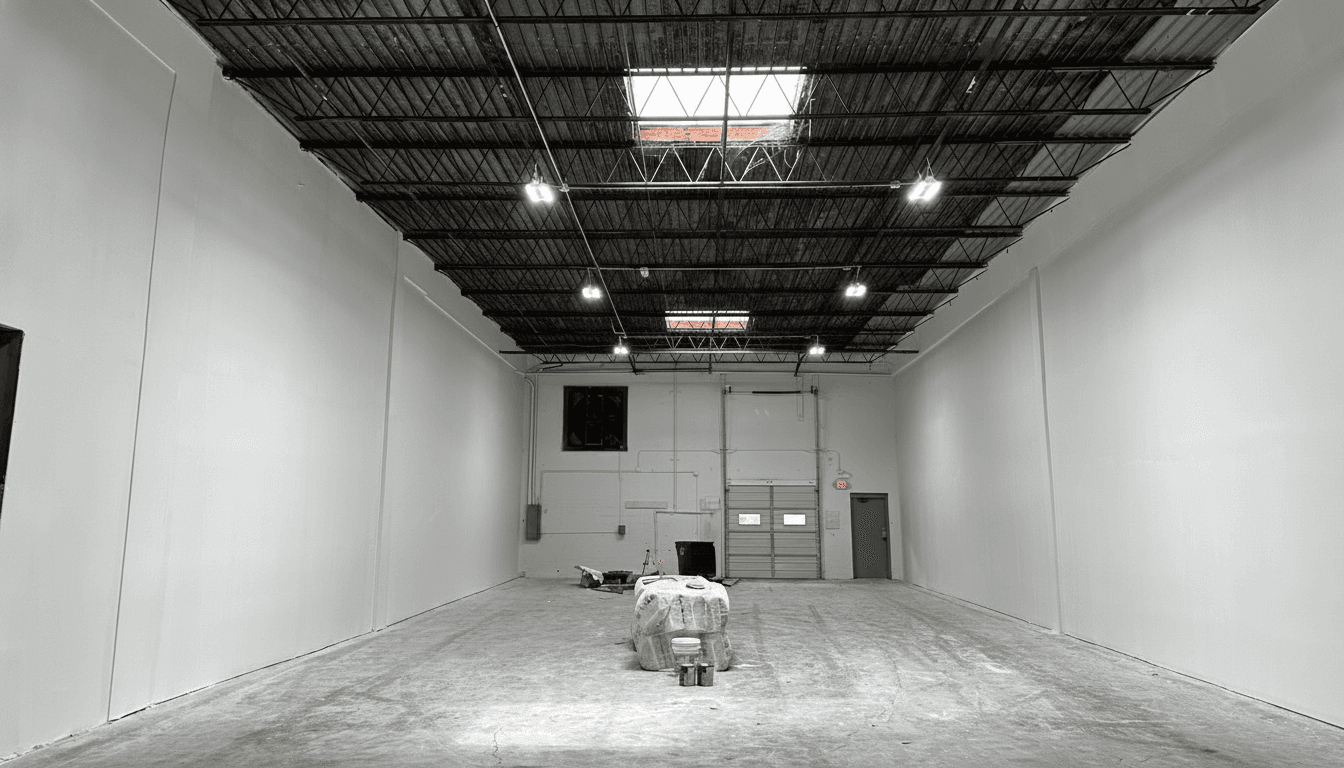
Commercial Rentals: Why a Blank Canvas Leases Faster Than a Leftover Buildout
With commercial rentals, the space sells itself or it argues with you. A prospect walks into a unit that still holds the last tenant's dust collector, plywood walls, and dead fluorescent tubes, and they stop looking at your rent. They start doing subtraction. Every leftover item becomes a cost they have to guess at. Clean the space down to a white box or a grey box and the guessing stops. That is the whole idea.
The short version
- A tenant tours with a tape measure in their head. Leftovers make the math harder and the offer lower.
- Grey box usually means shell condition: demo done, walls framed or bare, no finishes.
- White box usually means finished and neutral: taped and painted walls, lights, HVAC running, a basic restroom, sealed floor.
- The cheapest moves with the biggest effect on a showing are demolition, lighting, and paint.
- Old process equipment and heavy racking are the number one reason a unit sits. Somebody has to pay to pull them.
- Doing the work before you list turns a vague tenant improvement allowance into a smaller, known number.
- Interior demo and electrical changes still need permits and inspections.
What "white box" and "grey box" mean in commercial rentals
There is no code definition for either term. They are market words, and they change by broker. So put them in writing.
A grey box is a stripped space. Old partitions and finishes are gone. You may see bare block, exposed roof deck, and a concrete slab. Utilities are stubbed to the space but not distributed.
A white box is a finished neutral shell. Drywall taped, sanded, and painted. Ceiling either finished or intentionally left open. Lighting installed and working. HVAC unit serving the space. One code-compliant restroom in most cases. Floor sealed or ready for the tenant's finish.
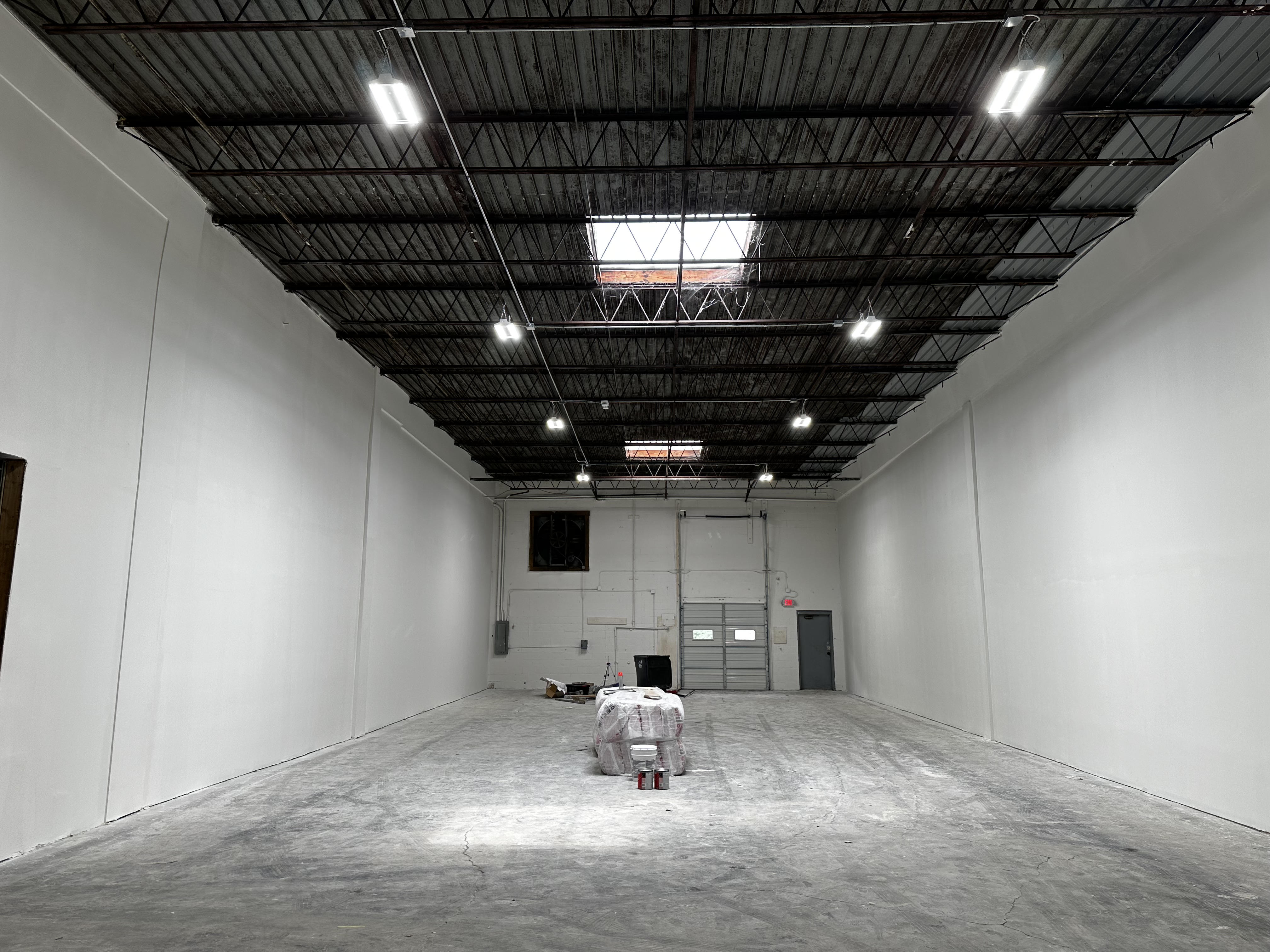 Vacant unit taken to white box condition with painted walls, exposed roof deck, and new lighting
Write a one-page condition list and attach it to the listing. "White box" without a list becomes an argument during lease negotiation. A list of eight or ten items does not.
Why the last tenant's improvements cost you showings
A prospect cannot see through someone else's operation. They see their own problem.
Here is the scenario that plays out over and over. A distributor tours a unit that a small manufacturer left behind, and there is still a mezzanine platform, a dust collector, and hard-piped ductwork over the middle of the floor. The distributor needs clear floor for racking, so instead of picturing pallets, they spend the tour wondering who pays to cut that steel out.
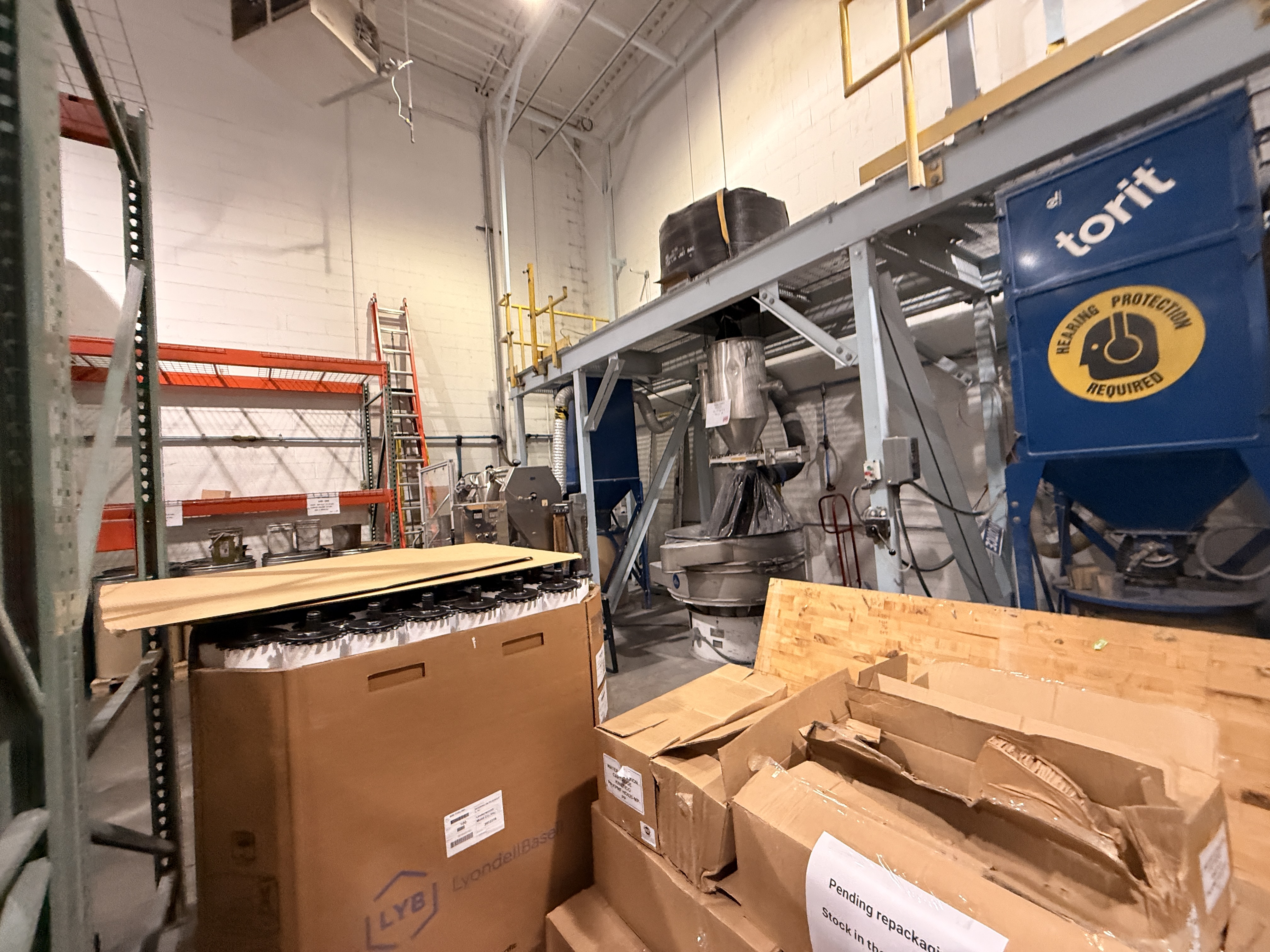 Leftover process equipment and dust collection left behind by a previous tenant
Same story with soft costs that look worse than they are. Stained wall panels, mismatched plywood wainscot, and a patchwork of surface conduit read as "this building is tired," even when the structure is fine.
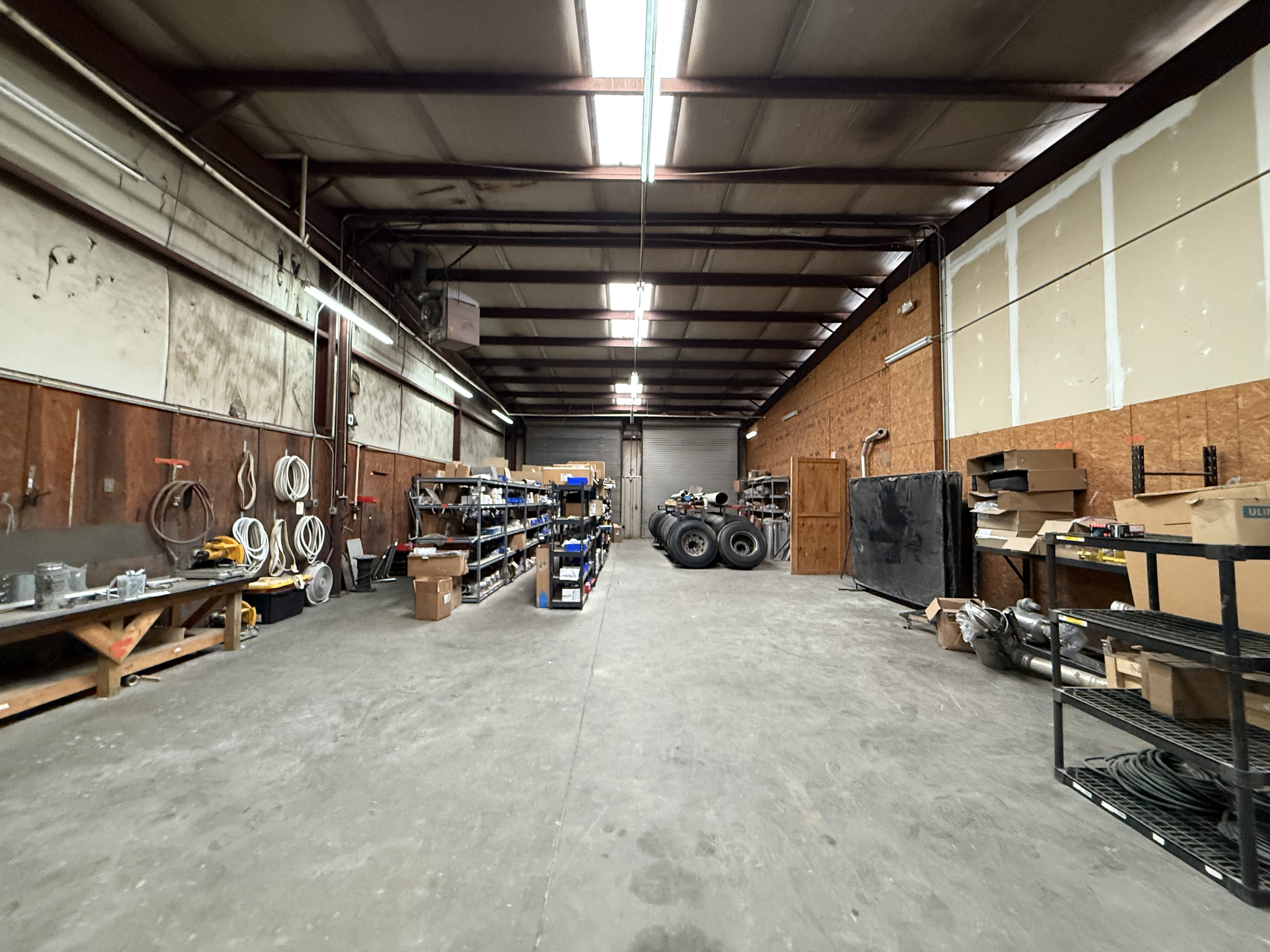 Older warehouse space with stained wall panels, plywood wainscot, and leftover shop fixtures
And a space that is still full of inventory or furniture cannot be measured at all. Nobody can judge column spacing or ceiling height around stacked goods.
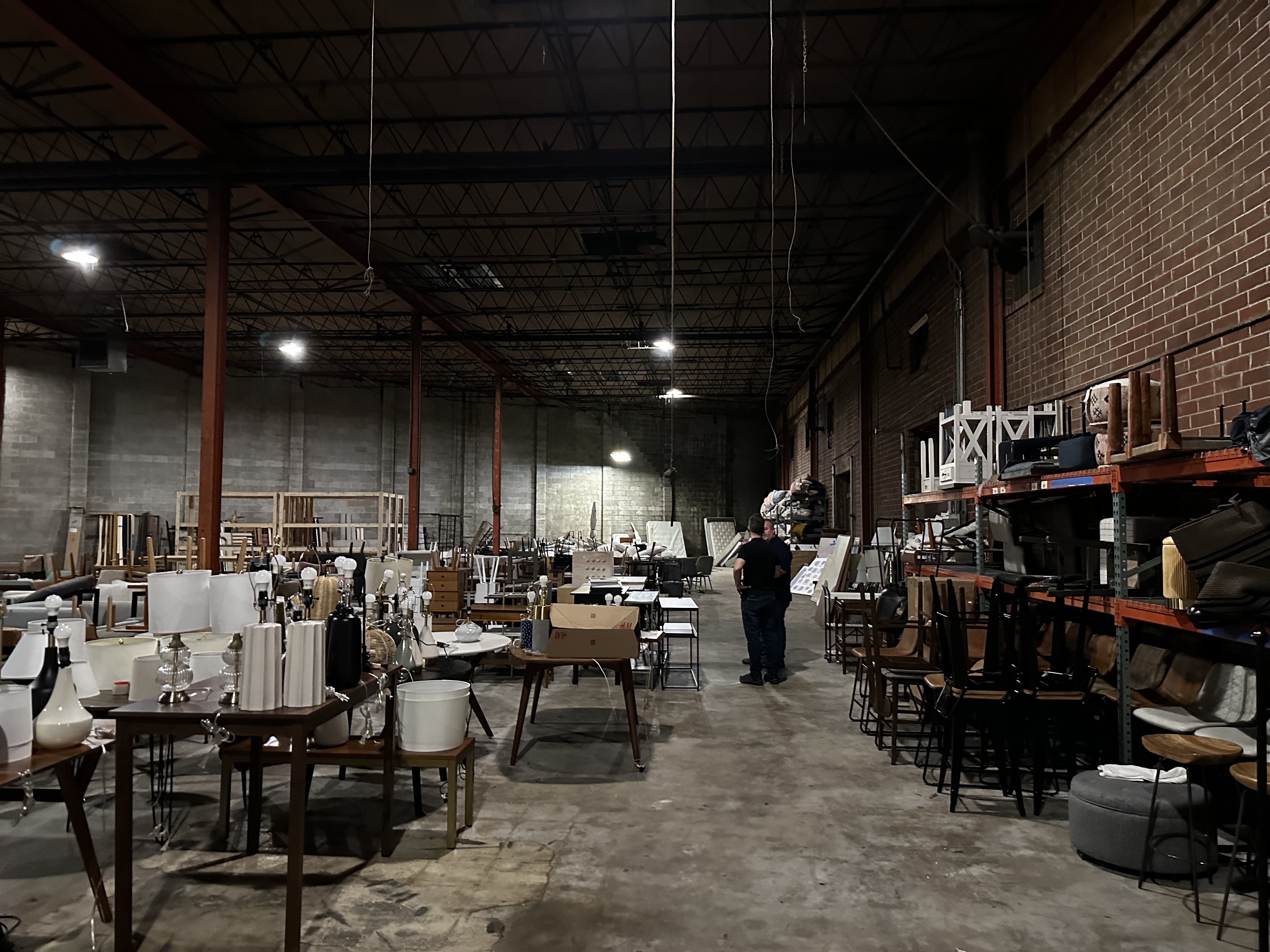 Warehouse still full of the prior tenant's furniture and lighting inventory during a tour
A tenant will not pay you for potential they have to imagine. They will pay you for square footage they can see.
As-is, grey box, or white box: what to spend before you list
| Condition | What you deliver | What a tenant still has to do | Best fit |
|---|---|---|---|
| As-is | Space as the last tenant left it | Demo, disposal, all finishes, possible equipment removal | A tenant who wants the same use, or a heavily discounted deal |
| Grey box | Demo complete, floor swept, utilities stubbed, no finishes | All walls, ceilings, lighting, finishes | Users planning a full warehouse conversion or a heavy restaurant or retail plan |
| White box | Painted drywall, working lights, HVAC on, restroom, sealed floor | Their layout, branding, and specialty equipment only | Office, light industrial, and small-suite users who want to move fast |
If you want a real number instead of a range before you commit, a walkthrough and a written scope letter is a short conversation — call and we will price the turn as a lump sum, not a guess.
The four moves that change a showing the most
- Demolition and haul-off. Old partitions, abandoned conduit, and equipment pads. This is the single biggest driver of how a space photographs and how it feels.
- Lighting. Swapping old fixtures for LED high-bay or LED strip fixtures makes a warehouse look twice as clean before you touch anything else.
- Paint. White or light grey on block, drywall, and even the underside of the deck. Paint hides forty years of patching for a fraction of what replacement costs.
- Floor. Grind, patch, and seal the slab. A tenant who sees a clean slab stops asking about moisture and cracks. If they want more, flooring and interior trades come after the lease is signed.
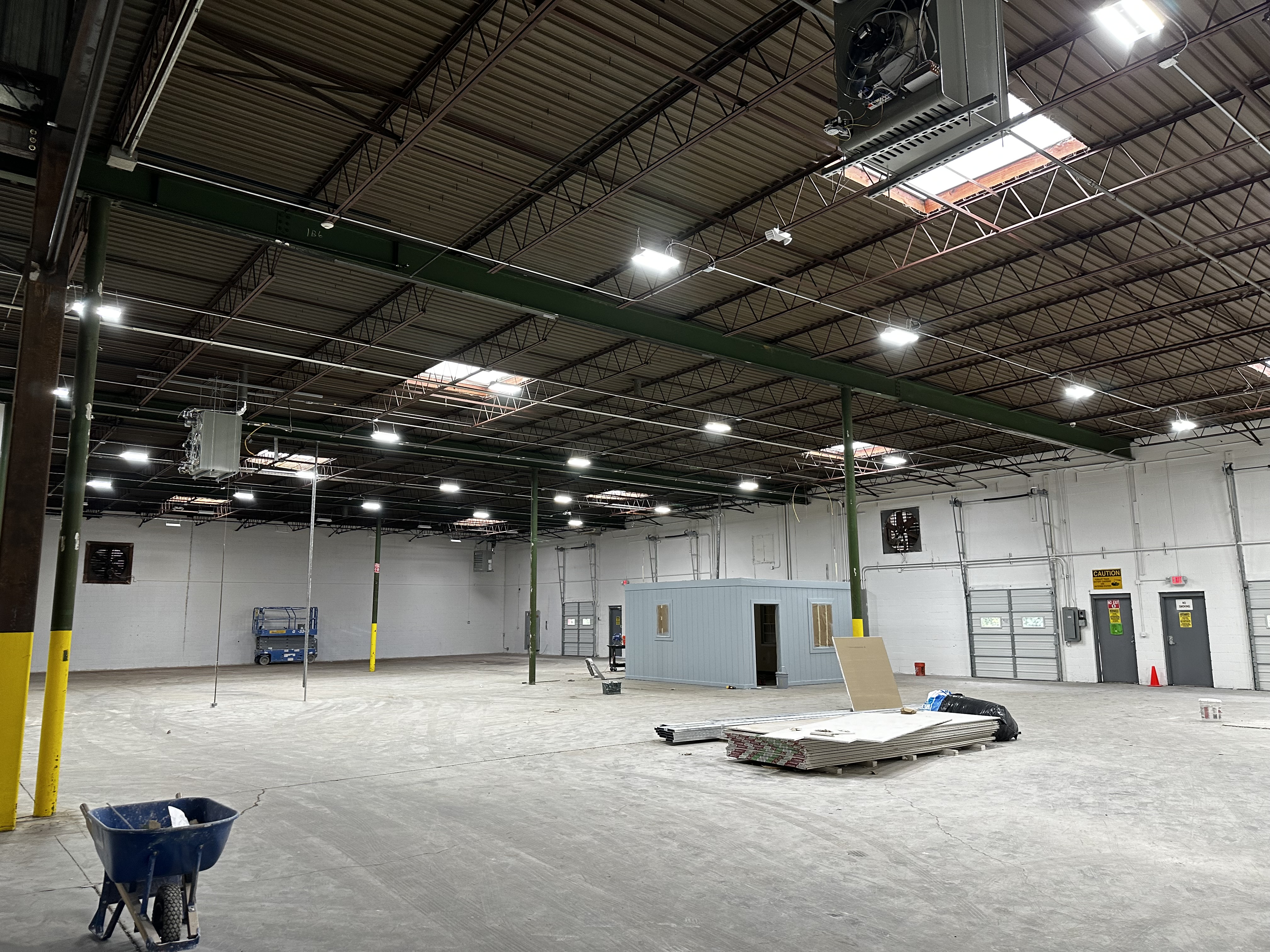 Cleared and repainted warehouse with new LED fixtures and a small prefabricated office
One more item people forget: leave the electrical panel labeled and the HVAC serviced. A prospect's contractor will look at both in the first ten minutes.
Who pays: allowance versus landlord work
You have two ways to fund the same result.
Give a tenant improvement allowance and the tenant hires the contractor. You give up control of quality and schedule, and the allowance is usually negotiated high because the tenant is pricing unknowns.
Do the white box yourself before listing and you buy the unknowns down. Your cost is fixed. The tenant's ask shrinks because their remaining scope is only their own layout and branding. Most of that work falls under tenant improvements once a lease is signed.
There is also a middle path. Deliver white box, then offer a smaller allowance for the tenant's specific needs — a break room, a few offices, a service counter. That keeps the remodeling scope tight and the schedule short.
Where this goes wrong
- "White box" with no definition. The tenant expected a restroom and a ceiling. You meant paint. Now you are 30 days into a lease with an open dispute.
- Demo without a permit. Pulling walls, moving a panel, or capping plumbing usually triggers review and inspection.
- Ignoring what is above the ceiling. Old sprinkler heads, abandoned duct, and dead conduit are cheap to remove while the space is empty and expensive to remove around a tenant's racking.
- Skipping the equipment question in the lease. Spell out restoration and removal obligations at the front end so you are not funding a previous tenant's leftovers.
- New paint over a real repair. Water staining on wall panels or deck often means a roof or flashing issue. Handle it as building repair first.
- Pricing off a walkthrough with no drawings. For anything beyond paint and lights, a short pre-construction step gets you a scope everybody can bid the same way.
FAQ
What is a white box in commercial real estate?
A finished, neutral shell. Typically taped and painted drywall, working lighting, HVAC serving the space, a code-compliant restroom, and a clean sealed floor. It has no tenant-specific layout. There is no legal definition, so list the exact items you are delivering in the lease exhibit rather than relying on the term itself.
Is it worth paying for a white box before leasing a commercial space?
Usually yes for smaller suites, because you are replacing a tenant's guess with your known cost. A prospect who cannot price their buildout either asks for a large allowance or walks. The tradeoff is that you spend money before you have a signed lease.
Who pays to remove the previous tenant's equipment?
Whatever the lease says. Many leases require the tenant to restore the space, but enforcement after they leave is hard. If the equipment stays, you own the removal cost, and heavy items like mezzanines, dust collection, or hard-piped process lines can be the largest line in the turn.
How long does it take to turn a vacant unit into a white box?
Demo, paint, lighting, and floor prep move fast once permits are in hand.
Does a white box hurt me with a tenant who wants a full buildout?
Rarely, and you can plan for it. A restaurant or medical user will cut into your new drywall anyway, so for those suites grey box is often the smarter delivery. Keep the money in lighting, roof, and slab instead of finishes a restaurant buildout will demolish.
Do I need a permit for interior demolition in a commercial rental?
Most jurisdictions require one once you touch walls, electrical, plumbing, or anything fire-rated. Sweeping and painting generally do not. Rules vary by city and county, so confirm before crews mobilize.
Get a number you can put in a listing
If you have a unit sitting, the fastest thing you can do is find out what a clean version of it costs. Call (404) 724-8709. We will ask what the last tenant did, what is still bolted down, and what kind of tenant you are chasing — about fifteen minutes on the phone. From there we walk the space and send a lump-sum proposal with a scope letter, so the condition you are promising a tenant matches the condition you are paying for. Vacancy is the most expensive line item you have, and it is the one that gets worse every month you wait.